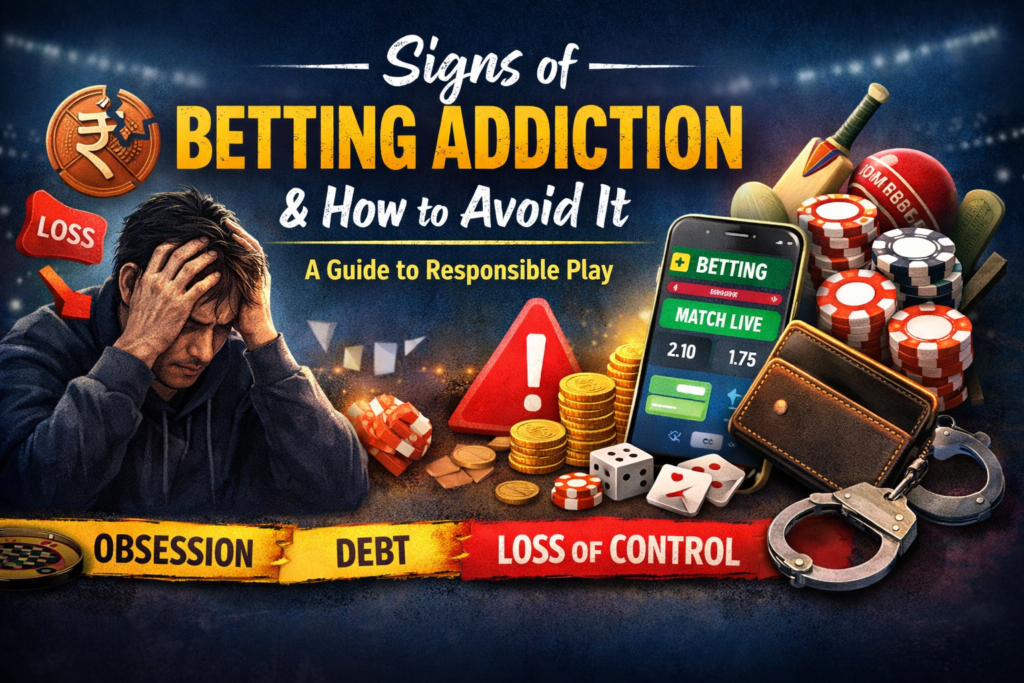
Signs of Betting Addiction & How to Avoid It: A Guide to Responsible Play
The line that separates a harmless pastime for the weekend and a habitual practice is usually less clear than many people admit. Many people find that placing bets on a cricket match that takes place on a Sunday afternoon match or a high stakes football derby brings a level that adds excitement to the game. But, when you consider that the “rush” of the bet is much more significant than sport itself, the bet’s value is transformed from a fun activity to a possible clinical problem.
Knowing the basics of betting addiction, and the best way to create a strong foundation around your financial health and mental wellbeing is vital for anyone who is involved in traditional sportsbooks or exchanges online.
The Psychology of the “Almost Win”
To stay away from addiction to avoid addiction, you must first be aware of the dangers. Betting platforms are made to release dopamine, not only when you win but also in the event of a “near-miss.” The sensation in the form of “I was so close, the next one has to hit” is a biological method. Online Cricket ID Whatsapp Number Studies suggest that the brain reacts to a near-miss similar to winning, thereby encouraging the gambler to remain within the game.
Recognizing this response to the body will be the very first thing you can do to recover control. This isn’t about willpower only but understanding the way your brain is stimulated.
Red Flags: Recognizing the Signs of Betting Addiction
Addiction doesn’t always start with the ring of a bell. It erodes boundaries slowly. In the event that you, or someone else you know has these behaviors It is the right time to take a break and review.
1. Chasing Losses
The most frequent and risky indication. If a bet loses money and then places another, usually more substantial, bet in order to “break even,” they are not betting to win. They’re reacting in a state of fear of losing money. The pursuit of losses is an algorithmic spiral that almost always results in a depleted savings account.
2. Preoccupation and “Mental Betting”
Are you always checking your odds at work? Are you constantly making calculations about potential payouts while you spend time with your family? If gambling has become the main focus of your day, it’s changed from being a nebulous concern to an omnipresent one.
3. Escalating Stakes for the Same “High”
Similar to chemical dependence gambling usually requires greater stakes over time in order to reach the same amount of excitement. If a bet of $10 doesn’t feel as if it was when you realize that you are being forced to put $100 on the line to feel the rush of adrenaline, you’re noticing that your tolerance has changed.
4. Secrecy and Defensive Behavior
Telling a friend the amount of money you lost, or denying the fact that you’re using a particular exchange platform is a serious warning signal. When shame becomes a factor it is a sign of addiction. If you find yourself feeling that you have to conceal your activities it is because you know that the behavior isn’t healthy.
How to Avoid the Trap: Strategies for Responsible Betting
Prevention is far more efficient than recovery. The establishment of a framework to “Responsible Play” ensures that the activity is sustainable and free of stress.
Establish a “Bankroll Management” System
Don’t bet on “scared money.” The money that is deemed to be “scared” is set aside for food, rent or other bills. Professional analysts utilize an automated system for managing their bankrolls which allows them to only bet on a small portion (usually 1 to 5percent) of an “entertainment fund” on any single occasion. If that fund reaches zero, betting ceases for the entire month. There are no exceptions.
Use Friction to Your Advantage
The age of technology has made gambling too simple. To counter this make it more difficult, introduce friction.
- Deactivate One-Click Betting: Forcing yourself to enter your personal details manually.
- Create Deposit Limits Many trusted exchange platforms let you set weekly or daily limits. Utilize them before you begin betting.
- Avoid gambling under the influence of alcohol Alcohol can lower inhibitions and can result in high-risk, low-logic decision-making.
The “Time-Out” Rule
Set up a cooling-off time period. If you’ve had one of those bad days or perhaps an extraordinary winning streak, you should stay away for up to 48 days. The emotions, both high and low, are an obstacle to sound decision-making. The time-out will allow the dopamine levels to settle so that you can be back in a calm and critical mind.
Treat Betting as a Cost of Entertainment
Change your mindset. Instead of viewing the wager in terms of something that is an “investment,” view it as tickets to a movie. Online Betting ID Whatsapp number You’re paying for 30 minutes of fun that the game provides. When you’re successful that’s an extra bonus. However, if the game is a loss, then you’ve “spent” that money on the experience.
When to Seek Help
If the excitement has waned it’s not necessary to make it through the exit on your own. Many organizations provide support in a confidential manner for people who are struggling with gambling addiction.
- Self-Exclusion: Utilize the self-exclusion functions on betting sites to prevent your access for life.
- Professional Counseling Therapy for Behavioral Disorders has been proven to be extremely effective in rewiring “reward” triggers associated with betting.
- Social Support Groups: Communities such as Gamblers Anonymous offer a space to talk about your experiences and not be judged.
Final Thoughts
Betting is supposed to be an exercise in knowledge and an opportunity to connect more deeply in the sport we adore. It’s a game of skill and chance however, the most important ability is to know when to quit. By setting clear limits, ensuring the transparency of your loved ones and adhering to the maths in the game you will be able to take pleasure in the excitement of the game without sliding into the trap of addiction.